Choosing the Right John Deere Tow-Behind Spreader for Sustainable Agriculture
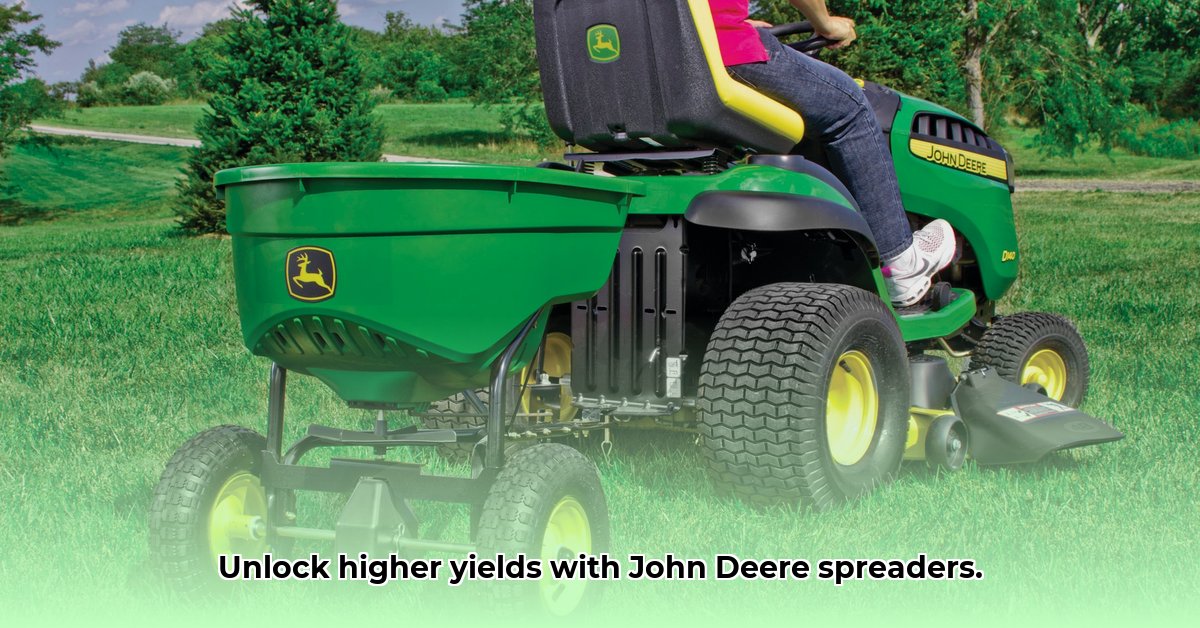
Selecting the appropriate fertilizer spreader significantly impacts farming efficiency and environmental sustainability. This guide compares two popular John Deere tow-behind spreaders—the 130-lb and 175-lb models—to help farmers choose the best option for their needs. We'll analyze capacity, ease of use, operational efficiency, and potential environmental impact, emphasizing the importance of responsible fertilizer management. This analysis, however, is limited by a lack of readily available data for the 175-lb model. For more on John Deere tractor attachments, check out this helpful resource: John Deere Augers.
Comparing the 130-lb and 175-lb John Deere Spreaders
The core difference lies in capacity. The 130-lb model, ideal for smaller farms or lawns, provides excellent ease of use and manageable refills. Its 12-foot spread width allows efficient coverage of approximately half an acre per pass. However, detailed specifications for the 175-lb model are currently unavailable, hindering a comprehensive comparison. This lack of data prevents precise analysis of its spread width, operational efficiency on larger farms, and overall comparative advantages.
Capacity and Coverage: A Clear Advantage for the 130-lb Model (for now)
The 130-lb model's known specifications enable a clear understanding of its capabilities. Its 12-foot spread width and 130-lb capacity directly translate to efficient coverage for smaller areas. Conversely, the absence of data for the 175-lb model prevents a similar assessment. Further research is needed to determine its performance characteristics, including its spread width and application rate. This information gap limits the scope of this comparative analysis.
Ease of Use and Features: User-Friendly Design
Both spreaders are designed for user-friendliness. Anecdotal evidence suggests the 130-lb model is particularly intuitive to operate, with robust construction. However, without detailed user reviews and specifications for the 175-lb model, a definitive comparison regarding ease of use and specific features remains challenging. More research is necessary to fully evaluate this aspect.
Operational Efficiency: Matching Spreader Capacity to Farm Size
Spreader selection depends heavily on farm size. The 130-lb model's manageable capacity makes it suitable for smaller operations. Its reduced refill frequency equates to increased productivity. For large-scale farming, the 175-lb model potentially offers greater efficiency due to its higher capacity. However, without confirmed spread width and application rate information, this remains speculative. A larger capacity spreader doesn't automatically translate to superior efficiency if it doesn't cover a proportionally larger area per pass.
Environmental Impact: Sustainable Fertilizer Application
Responsible fertilizer management minimizes environmental risks. While the precise environmental impact (fertilizer runoff and fuel consumption) of each spreader remains unquantified, responsible application practices are paramount regardless of model. Precision application techniques, avoiding application during rain or high winds, and employing appropriate buffer strips can significantly reduce environmental impacts. Further research is vital to determine the long-term effects of different spreaders on soil and water quality.
Actionable Recommendations
For Small-scale Farmers: The 130-lb model is a cost-effective, user-friendly solution.
For Large-scale Farms: Consider the 175-lb model if more data becomes available; prioritize precision application technologies. Isn't it critical to understand how fertilizer application impacts yield and environmental sustainability?
For Equipment Dealers: Advocate for transparent information from John Deere. Clearly demonstrate the strengths of each model tailored to specific farm sizes.
For Regulatory Agencies: Continue monitoring fertilizer application rates and their impact on water quality. Promote responsible fertilizer management practices.
Limitations and Future Research Needs
This analysis is limited by the lack of comprehensive data on the 175-lb model. Further research is needed to gain a full understanding of both spreaders' performance and environmental impact. This includes:
- Detailed specifications for the 175-lb model (spread width, capacity verification).
- Empirical studies quantifying fertilizer runoff and fuel consumption for both models under varying conditions.
- Long-term soil health assessments comparing the effects of using these spreaders on soil nutrient levels and overall health.
Conclusion: Sustainable Farming Requires Informed Decisions
Choosing the right spreader is crucial for efficient and sustainable farming. The 130-lb model is a practical option for smaller operations. The 175-lb model’s potential benefits for larger farms need further investigation. Ultimately, responsible fertilizer management practices are essential to minimize environmental impact regardless of the chosen spreader.
Resources
- John Deere Website: [Insert John Deere Website Link]
- Relevant Agricultural Organizations: [Insert Links to Relevant Organizations]
- Fertilizer Manufacturers: [Insert Links to Relevant Manufacturers]